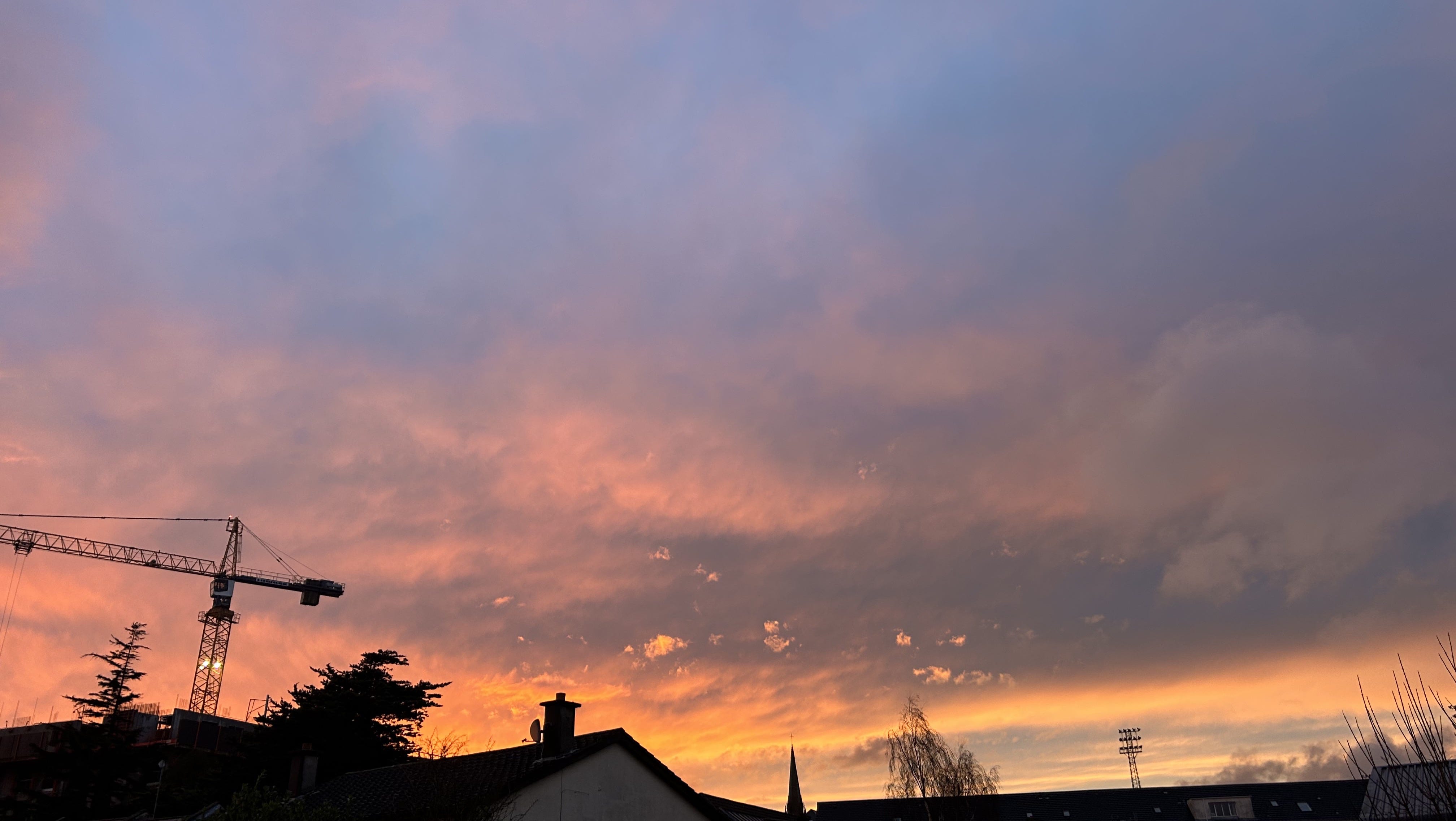
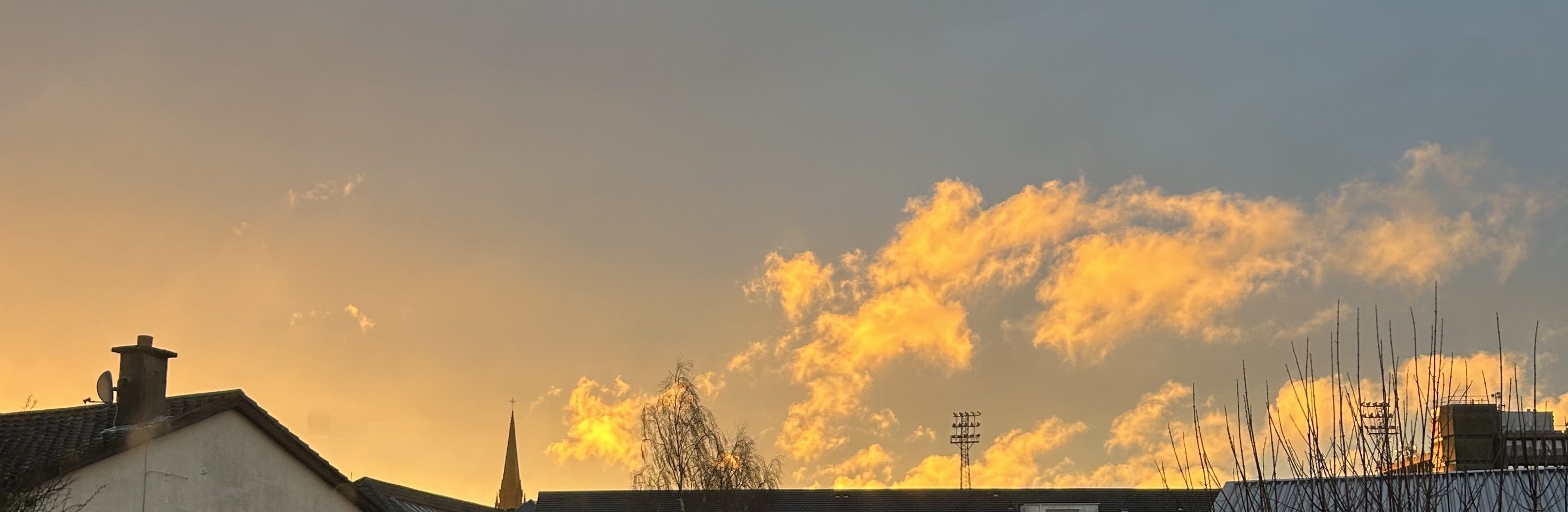
light through the clouds
notes and january favourites

everyone I meet recently says the same thing: january has been a long month.
this week, ireland weathered the first winter storm of the year, storm chandra. We endured long days of terrible wind and rain until, rather suddenly, there was a morning where the sky was clear and blue over the flooded city. This is the way of things at this time of year. Everything is miserable and stormy and unendingly dark until, miraculously, it isn’t.
as the days slowly start to get longer and the start of spring approaches, I’m feeling the light start to break through the clouds of a long winter. This is the first of a series of monthly newsletters I want to try to write this year where I reflect on the month and share some of my monthly favourites and recent glimpses of light.

i.
The start of a new semester is always a busy time in my world, but I’ve been trying my best to make the most of it and set myself up for good research, learning, and writing habits in the months to come. I decided to audit a class this semester and am hoping that attending lectures and seminars in the next few months will help me to feel a little more engaged and organised. Last semester I did not take any classes and I spent a lot of the late autumn feeling unmoored and completely overwhelmed by the work I was doing. I’ve spent a lot of time this year stuck in the past and feeling nostalgic for college - for attending classes and spending time in the hidden nooks of the library stacks and being immersed in campus life. There’s a lot that I miss about being an undergraduate student and all the wonderful parts of that period of my life, but I feel silly getting caught up in the yearning for student life when I am literally currently a student. Yes, being a postgraduate is very different, and doing full time PhD research is not at all the same as being a college undergraduate, but it is student life nevertheless and I don’t want to keep letting it pass me by while I’m stuck wishing for the past.
so. I finally went to the university library a few times this week, once to review a chapter draft before a meeting, once to check out books I had ordered months ago, and I realised how much I had been missing this feeling of exploring the stacks or of sitting at a library desk, and how easy it would be for me to make this part of my routine again. I went to the library with a list of three titles, but walked out with a stack of seven books(which my shoulders and spine greatly regretted by the end of my walk home). I’m reading again, a lot, reading articles on religion and theology for school and mystery novels for my own entertainment and reading before I fall asleep every night instead of scrolling on my phone. It feels better.


ii.
I don’t usually watch many films in the theatre, but I’ve had a recent surge in interest in going to the cinema, and this month I saw two new films, Hamnet and The History of Sound.
The former was absolutely fantastic, and has earned its reputation for being beautiful and emotionally devastating. I was very impressed with the performances, the writing, and the visuals and design of the film. It’s probably my favourite film I’ve seen in a while, although I’m not sure if I will be able to watch it ever again - it’s the kind of film that sticks with you, that we spent the whole walk from the theatre discussing, that I spent the rest of the week thinking about. I really enjoyed learning more about the production design, including the film’s gorgeous sets and costumes, in this article from Vogue’s Elaina Patton, which highlights some of the incredible artistry that makes the film so wonderful to watch and gives it such a rich visual mode of storytelling. I’m hoping to finally read the Maggie O’Farrell novel upon which the film was based soon.


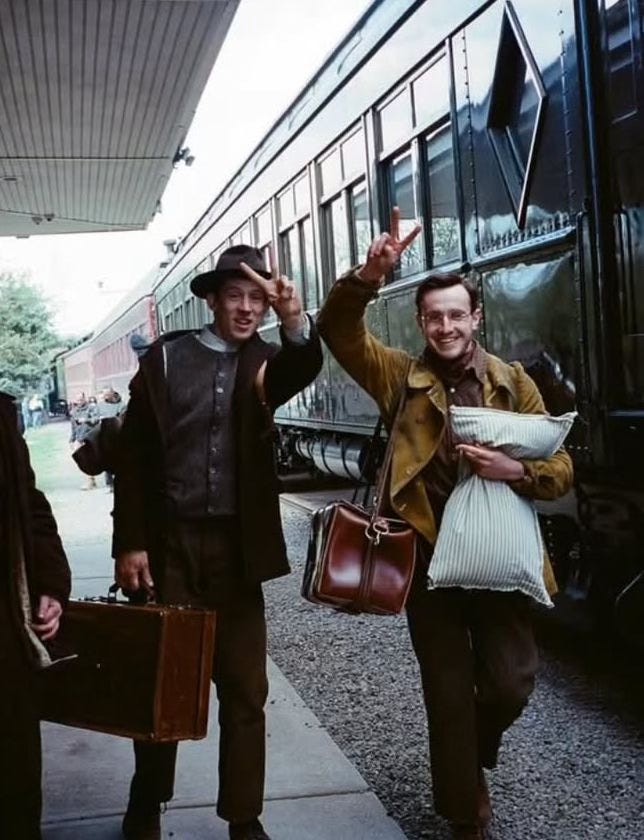
The History of Sound is a much quieter, far less celebrated film, but one I really liked nevertheless. This film is a slow, thoughtful(or as most social media reviews would put it, boring) reflection on music, love, and memory set in the early 20th century, particularly the years of World War I and the 1920s. Based on a 2018 short story of the same name by Ben Shattuck, it follows the reminiscences of an ethnomusicologist born in Kentucky circa 1900 on his time as a student at a music conservatory in Boston, where he meets and begins a romantic relationship with a fellow student. Reunited after the end of the war, the two travel through rural areas of Maine, carrying with them heavy cases of phonographs and wax cylinders as they collect and record local folk songs, and the histories of musicians and the already-dying-out traditional music of the region.


I’ve seen a lot of negative responses to this film online, which surprised me slightly. It’s not a perfect film, nor do I think it is for everyone, but I thought that it was beautiful and well made and had a moving story to tell.
Aside from the “snoozefest”allegations, a lot of the criticism I’ve come across has to do with the film’s depiction of a romance between its lead characters, played by Paul Mescal and Josh O’Connor. Their romance is a core part of the movie, but it is not straightforwardly a love story, nor is its focus on queer identity or sexuality in the way that I think some viewers expected it would be. At the risk of engaging in Discourse, I think there is, perhaps, a certain movie going audience who watched this film purely because they heard it was Gay and expected it to be another addition to the fujoslop canon, where the historical setting and artistic interests of the film would be mere set dressing for the far more important subject matter of gay romance. This audience was then surprised and frightened and disappointed to learn that it was a story not just about Mescal and O’Connor kissing(which, like, they do! I don’t know why I am seeing so many complaints about this!), but had themes and music and ideas. I’ve also seen a lot of (often somewhat mocking) comparisons between this film and Brokeback Mountain, which I find to be, as actor Paul Mescal remarked when asked about the two films, a “lazy and frustrating” comparison which diminishes both into a false, flattened caricature of queer cinema as ‘two dudes in a tent’: narratives which can be easily digested and categorised, broken down into fanfiction tropes as easily as it becomes material for homophobic jokes. Brokeback Mountain is an important and affecting film in large part because of its depiction of repressed sexuality, but The History of Sound, despite its historical setting, does not have this same focus on sexual identity and the external pressures of masculinity and homophobia. In this film, the relationship between the main characters is an important fact of their lives, but not the driving force of the narrative arc, and queerness is not represented as a source of shame or torment. If indeed love here is something that ‘dare not speak its name’, that inability to speak is not caused by the repression of homosexuality, but instead that love itself is in some essential way unsaid and unspeakable; like the ephemerality of a live music performance, even when we try to capture it in wax or in words, it remains intangible and impossible to convey.
iii.
Both Hamnet and The History of Sound are films that feature Irish actor Paul Mescal, who I had previously only seen in the film All of Us Strangers(2023) but who I knew generally as something of a local celebrity. I thought he was wonderful in both of these 2025 performances, but I mention this not to talk more about Mescal but for the sake of some strange synchronicities. I learned this week when trying to figure out how old he is that Mescal and I share a birthday, and that we were born exactly three years apart. We share our birthdate with the historical Hamnet and Judith Shakespeare, and with another Irish artist, novelist James Joyce, who wrote his own version of the Hamnet/Hamlet story into his epic novel Ulysses. I read an interview with the author of Hamnet where she described first seeing Mescal in a theatrical production of Portrait of the Artist as a Young Man at The Gate Theatre in Dublin, a play based on another of Joyce’s novels. I don’t know what I’m getting at with any of this, but I’ve been having a lot of conversations with friends lately about these sorts of synchronicities: pattern recognition and the uncanny of seeing familiar details and strange repetitions in unanticipated places. The idea keeps coming up, another layer of the pattern. I know some would attribute all these coincidences to like, astrology or something like that, but I don’t have any answers to offer; I just like following the threads of these weird coincidences and connections.
I’ve been gathering ideas and finding ways to weave them together in all areas of my life lately, from these silly reflections on famous february birthdays to the work I do as a researcher, connecting together concepts and authors and details from every source I come across. As part of my current efforts to 1) have more non screen based hobbies and 2) clear out clutter in my home, I have been taking up collaging again, pasting together disparate words and images and trying to make something new out of my hoard of paper scraps and half-finished letters and last year’s calendar pages.


This month, I’ve tried to find time to catch up with a lot of friends, on the telephone or in person where I can, and with every conversation I feel a little more grounded in my life and my connections. I put in the extra effort this month to go out, even on the coldest and busiest and most miserable winter days. It is (nearly) always worth the effort. I take photos of the things I see. I watch the wild geese flying overhead, the cormorants along the canal. I go out into the park or the woods and listen to weird music until I feel better.


A selection of my favourite weird music to listen to on walks: I’ve been obsessively listening to two artists in particular over the past few weeks, Björk(as referenced above in my collaged creations, I’ve listened to her second album, Post, on repeat, including “Modern Things”, and “Isobel”—another synchronicity, a song that coincidentally shares my name) and Spellling, both of whose unique, experimental, and strange soundscapes have brought brightness and texture into my month.
Spellling is an artist I have listened to a few times in the past, but I recently rediscovered her music and came to really appreciate it, especially my current favourite of her albums, 2021’s The Turning Wheel. Her music is experimental and haunting, with a sound that effortlessly flits between genres and tones, constantly evolving and changing throughout the album’s tracks, divided into two sections, ‘above’ and ‘below’ as she weaves together mystical fairytales and sinister lullabies. The opening track, “Little Deer” is a jazz-infused pop song littered with mythic imagery and which explores the idea of past lives, death, rebirth, and the synchronicity of “moonlight on the secret thread”. In one of my favourite tracks, “Revolution”, she sings about the experience of personal growth and the passage of years as “a permanent revolution”, one with no end-point or final stage, a notion that also feels true of her artistry, constantly turning and reinventing.
this newsletter was more disorganised than most, but I like experimenting with the freedom of not having a structure to fill in - we’ll see if I stick with it or return to more rigidity and order by next month’s reflections newsletter :)
you might be able to sense from some of the topics I reflect on this month that I am feeling some uncertainty about the month (and months) ahead, but I’m trying to keep working, keep revolving, and continue to seek out the moments of light through the clouds. I hope you are seeing some light in your world too.
thank you so much for reading! if you enjoy cloudtopia, please subscribe, share with a friend, and/or get in touch <3
until february,
isobel