

having a bog summer
july favourites

so,
july has slipped by quickly. It’s been a month of hot weather, the usually ever green landscapes of Ireland scorched by weeks of bright, endless sun.
It’s been a busy month. I work at a university, and people tend to think that the summer means we get time off or a break from work, but even when students go home for the summer, the cogs of academia do not stop turning. Days at a time recently have been absorbed by stressful medical appointments and the unpleasantness of everything that attends hospital visits.
Other parts of the month have been lighter. I’ve had some phenomenal meals. An unreal dinner in the Liberties at Notion, a restaurant that offers a ‘no fomo’ set menu that offers a taste of every dish they serve, each of which was unique and delicious, a cauliflower curry with date drizzle, cacio e pepe orecchiette, mackerel in a moqueca sauce, an apple and celery spritz, rich soda bread with treacle butter. At home, I’ve been getting into a lot of big, classic summer salads1 - watermelon and feta, canteloupe and prosciutto, pasta salad with tomato from the garden. A fantastic dinner of fresh atlantic seafood in Kerry, crab claws and seabass and prawns in a black squid ink risotto. I’ve met up with friends for picnics in the park, drinks on sunny patios, coffee dates, flea markets and art fairs.
a friend told me recently that she thought this was going to be a bog summer, and while I cannot explain quite what I think that means, I know it to be true.
Think: quiet, patience, preservation, slowing down time. Think: peat, butter, wild berries. Think: decay and regrowth. Think: transformation. A blanket of moss. Sink into the bog.
I’ve been thinking again about networks. The ecological network that the bogs are an essential part of on this island. As the heat wave goes on, the balance of ecosystems becomes more precarious as water levels fall low, dry hillsides are consumed by flame, and invasive water lilies and zebra mussels fill the lakes of Killarney. The webs of the environment are unravelling in alarming ways all over the world; the summer heat brings this ongoing collapse into clearer focus.
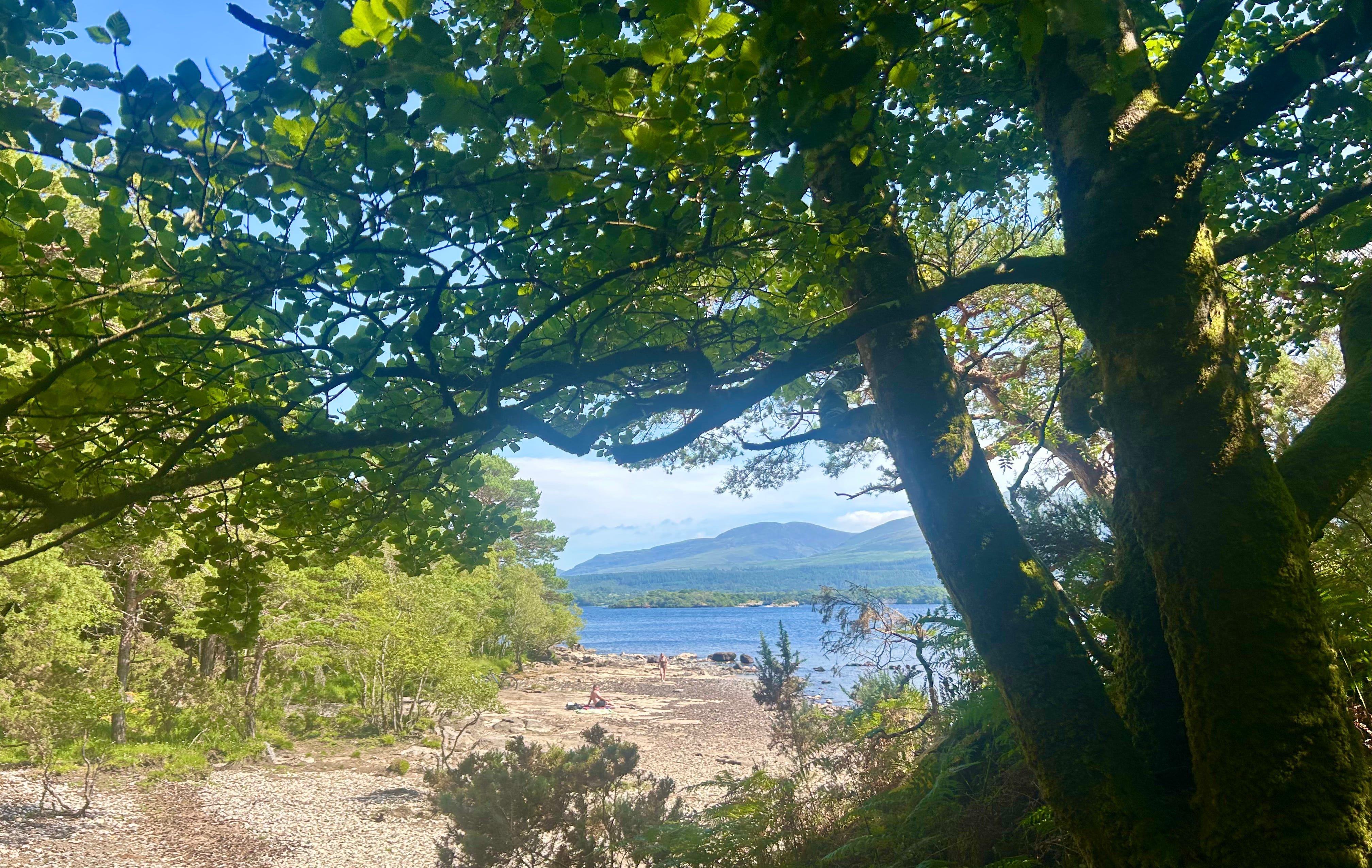
I’ve been reading again lately about the networks of monasteries and community - the utopian dream of the phalanstery, part secular monastery and part socialist cooperative2; the medieval female-led communities of Beguines living simple, spiritual lives, women who “were essentially self-defined, in opposition to the many attempts to control and define them” in a beguinage, “a village of women within a medieval town or city”3; the secluded monastery of Innisfallen, which sits on an island in Lough Leane and was an important centre for monastic scholarship and religious education in the middle ages. Today, a fifteen minute boat ride allows visitors to reach the island and explore the ruins of the abbey. We walked around the island on a sunny afternoon, getting lost in the foliage and enjoying the views of the lake and the mountains across the water and the timeless magic of the cloister ruins. Some say Brian Boru, the Irish High King, was educated on this island. Some say the island is haunted by the monks who lived and died there. As remote as the monastery is, it is also incredibly connected - connected to a network of traditions of Irish monasticism and scholarship, to the complex political history of Ireland, to the ecological networks of the lake and water systems, the ecosystems of Killarney National Park and the Kerry mountains that surround it.


Another network: the internet(and the data systems and digital technologies that power and intersect with it). Even by the heavenly lake shores of County Kerry, my phone tucked away out of reach, no data centres in sight, the networks of technology are inescapable, and I was thinking about Ireland’s water systems, about the low levels of water that we are experiencing in lakes and bodies around the country, and about the recent hose pipe ban which has been implemented to preserve water in Irish homes. And amidst all of this, the data centres which are draining our water supply day by day.
The internet isn’t some magical realm, existing only in ‘the cloud’. It exists here on Earth, in the form of technologies and infrastructure and human action. Furthermore, AI use does not play out in cyberspace; it happens here, in our world, using our electricity(21% of Ireland’s electricity is now used by data centres) and our water, the water we cook with, bathe in, water our gardens with, drink. From the Irish Independent: “Data centres now using almost five million litres of public water per day”. From the UN: “AI’s environmental costs threaten water, land and climate”. (The full report can be accessed here: “Environmental Cost of AI’s energy use”.) Our current data systems are unsustainable, and the problem seems only to be getting worse.
For more on this(and, interestingly, Irish monasticism and ecology!) consider listening: “The Irish Government is in the pocket of Big Tech and Data Centres”, The Blind Boy Podcast.
Earlier this month I finished reading Fragments of an Infinite Memory: My Life With the Internet by Maël Renouard, a rambling, eclectic philosophical essay that ruminates on how human experience is shaped by the internet age. You get a good sense of Renouard’s interests in this book from its opening paragraph, which is equally thought provoking and humorously relatable:
“ONE DAY, as I was daydreaming on the boulevard Beaumarchais, I had the idea—it came and went in a flash, almost in spite of myself—of Googling to find out what I’d been up to and where I’d been two evenings before, at five o’clock, since I couldn’t remember on my own.”4
Renouard strings together personal anecdotes, history lessons, references to an array of French thinkers from Marcel Proust to Jacques Derrida to Gilles Deleuze to Jacques Tati, digital ephemera(almost six full pages of comments pulled from Youtube videos is presented like an archaeological finding: “Graffiti found on the walls of YouTube. 2012-2014. Comments left below the videos of hits from the 1970s, 1980s, 1990s, 2000s. Spelling has been largely preserved.”), and reflections on text, image, memory, and phenomena. The resulting book is a strangely free flowing5, yet deeply insightful contemplation on life with the internet, one which I greatly enjoyed reading.
I’m also currently(finally) reading Cory Doctorow’s Enshittification, which is reinforcing a lot of what I already know about the topic as well as giving me even more new things to get angry about.
Finally, another internet topic that caught my attention this month : Saleh Kayyali’s “Interface Studies”, a really thoughtful and interesting series of video essays on digital design. The first of these I came across was one called “‘Save for later’ has no later”, where Kayyali breaks down how ‘save for later’ and ‘bookmark’ features on websites have been designed and how they impact our interactions with content, thinking about the philosophical and experiential aspects of what it means to create our own archives of the parts of the internet we interact with while also analysing design, functionality, and the ways that these features could be made better. I find his approach to topics like this really engaging, and I really appreciate his attentiveness to our digital experiences and the subtle, intricate ways that design trends shape our interactions with technology. My favourite of these videos at the moment is “The Hidden Cost of Instant Answers”, which explores the processes by which we learn and process information, and how the instantaneity and overwhelming volume of information and data available to us in the digital age is reshaping our processes of memory and thinking.


july favourites
fragrance: eau de sens - diptyque
notes: neroli, bitter orange, juniper, angelica
i picked this up at diptyque’s flagship store in paris last winter at the recommendation of a salesperson there and this summer it has become one of my favourite scents. it has a fresh, bright quality to it, a pleasant mix of floral and green notes, citrus, and a hint of spiciness, perfectly suited to sunny days and warm evenings.
beverage: strawberry + rhubarb lemonade
made by my partner with rhubarb from the garden, this is fabulous on its own or mixed with just about anything. I made a matcha lemonade with it one morning to take to work and it was a perfect drink.
new album of the month: angel in plainclothes - angelo de augustine
a lovely new album from Angelo De Augustine, who I discovered through his collaborations with Sufjan Stevens, and whose music I have really enjoyed since. His sound is a sort of indie-folk, singer songwriter-y one, soft voiced, delicately instrumented, full of rich storytelling. There’s something haunting, otherworldly, and transcendent about De Augustine’s music, his gentle, wavering voice recounting old myths and lost folk tales, secrets and confessions, yet always looking up for glimmers of light and magic. “Pet Cemetery” is a ghost story set in Los Angeles Pet Memorial Park, contemplating memory and finitude in a landscape populated by Hollywood ghosts. It’s followed by “Spirit of the Unknown”, a song about heartbreak and the hope for change. “The Cure” reflects on cycles of addiction6, while on “Cosmic Ride”, De Augustine contemplates the future and looming disaster. In “With a Love So Kind” we get a poignant, affirming song about love and gratitude. It’s hard to pick just one track to highlight as a favourite from this beautiful album(I can really only recommend that you listen to it straight through), but I’ve been returning a lot to “Pictures on My Wall”: melancholy, reflective, but still, even through the doom and gloom, carrying a current of hope.
old album of the month: mother earth’s plantasia - mort garson
plantasia is an iconic work by electronic pioneer Mort Garson, and one of the earliest records to be composed entirely on the moog synthesiser. Marketed as music to help plants grow, each track title makes whimsical reference to a different type of plant(“symphony for a spider plant”, “concerto for philodendron and pothos”7) and the musical genre traditions it reimagines(“rhapsody in green”). Initially, the idea that the music helped plants to grow was its essential selling points, and one of the only ways to listen to the album when it was released in 1976 was at a Melrose plant store called “Mother Earth”, which gave copies of the record to its customers. I have a copy of the more recent reprint of this record on vinyl, and its one of my favourites to listen to, a perfect background to reading or writing or just being, photosynthesising like a plant in my apartment. The title track, “Plantasia” is easily my favourite song out of this eclectic but delightful project, a synthetic symphony that somehow perfectly blends the electronic experimentation of Garson’s music with the earthy, nature-focused story it tells about plants and the people who love them.


film: the odyssey - dir. christopher nolan
like everyone else on this website, i saw the odyssey in the cinema this month.8 However unlike everyone else, I have no interest in trying to come up with a hot take or share some sort of unqualified and overly confident opinion on history or classic literature or film or translation or feminism or poetry or homeric greece. Most of the takes i’ve seen about this movie have been not only bad and incorrect, but even worse, annoying.
Instead, I just want to say I think about the scene where Matt Damon as Odysseus walks into a big ominous cave, sees a cheesecloth hanging up, immediately eats some of the cheese and goes like “mmm yummy cheese :)” every day. Also, I love the aulos.
games:
I’m back on my mystery/puzzle video game grind9 and wanted to highlight two games I played and really enjoyed this month!
the mermaid mask
a locked room murder mystery set aboard a submarine on an uncertain sea voyage. Two detectives—returning characters from this game’s predecessors, Secret of the Swamp(a murder mystery in a tourist trap called ‘Boggy’s Bog’ surrounded by legends about a cryptid that dwells in the swamp) and Tangle Tower(also a murder mystery, this one set in a strange tower mansion that houses the members of a family of wealthy eccentrics, each with a secret to hide)— enter the submarine and become submerged in the stories and secrets of this claustrophobic environment and the haphazard cast of characters that were aboard when the murder happened, making them the only possible suspects(unless, of course, something supernatural happened…) in a terrible, impossible crime. Each suspect in the game harbors a secret that you must put together the pieces of to get them to reveal the truth, pieces which are obtained through collecting items, discussing evidence and people with each character, and solving puzzles to uncover hidden information. I found this game and its story to be thoroughly engaging and overall very satisfying, although at times the mechanics of figuring out exactly which piece of evidence or conversation I am missing to unlock a confrontation with each suspect was a bit frustrating, and there were many storylines that I had figured out long before I was able to actually complete the right sequence of steps in the game to complete. This game follows and builds on the format of the previous two games, but here I think it has been pretty much perfected, and it is by far the most well crafted entry in this series(which I already really enjoyed!). It has great puzzle design, a clever mystery story that I think accomplishes the rare task of including some magical elements without making the mechanics of the mystery itself feel too fake or gimmicky, and more than anything, the game is absolutely oozing with atmosphere. I really love its character designs and the feel of the different rooms on the submarine, which contribute a lot to the telling of this story and the sense of doomed voyages, being trapped under the sea, and facing great unknowns. I also was impressed by the soundtrack and sound design, which adds a lot to the feeling and experience of playing this game and inhabiting its world.
type help
This game by William Rous10 is already something of a cult classic, and can be played for free in a browser or in the new, reimagined version available to buy, “The Incident at Galley House”, which includes new visuals, audio, and additional story and puzzles. I have only played the original, and while I am pretty curious about the new version of the game, there’s something about the simplicity and unique gameplay interface of the original version of the game that made it so memorable and worth playing for me. Type Help is an entirely text based game. You are given access to a computer interface previously used in the investigation of a shocking, unexplainable incident, with files detailing the events of a party at Galley House. At first, you only are given access to a few introductory files, and some hints and command prompts that lead you to figure out how to access more files. As you do, the story begins to unfold. The thing that I love most about this game is the feeling of discovery that follows this process, so I won’t say anything else about the mystery or the investigative gameplay here, but I think it is a really incredible concept and a very unique game experience. Give it a try, if you’re interested(imo it’s worth checking out even if you don’t complete the story in its entirety, which is not an easy task), and remember… there are no ghosts in Galley House.
Thank you for reading!
I’m off to London for the weekend, but will be back to you next month with more reflections, favourites, and, all going well, some dispatches on the art and experiences of my upcoming travels :-)
until then,
isobel
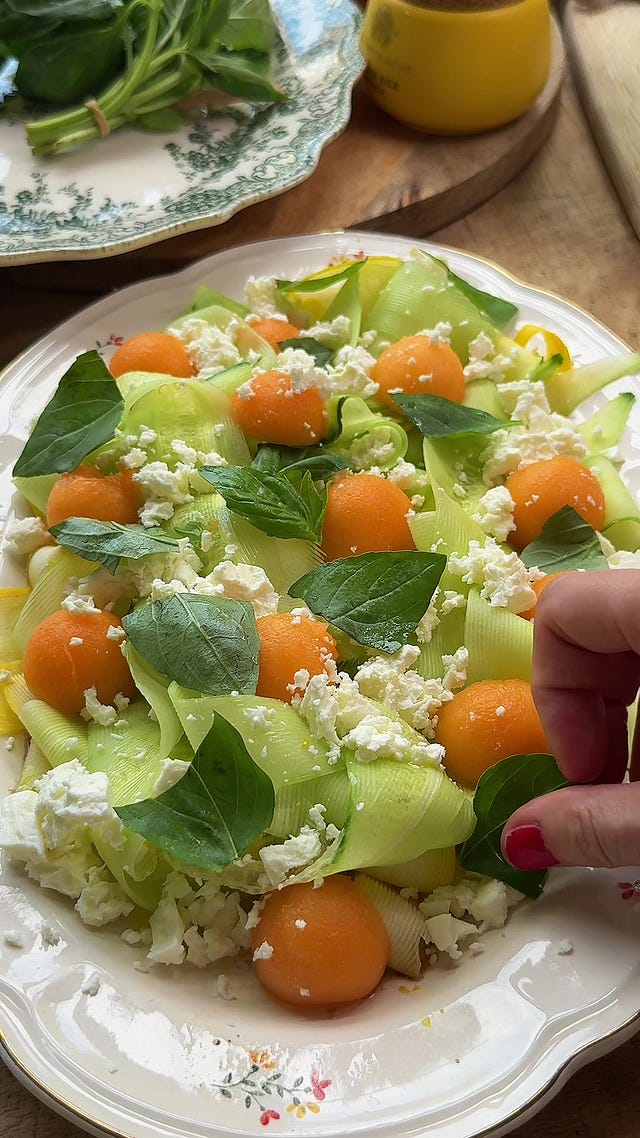
my current summer menu has been deeply influenced by my recent viewing of this highly aspirational french salad tiktok:
 Tiktok failed to load.
Enable 3rd party cookies or use another browser
further reading on the phalanstery concept and Charles Fourier:
Dominic Pettman, “Get Thee to a Phalanstery, or, How Fourier Can Still Teach Us to Make Lemonade”, 2019.
Laura Swan, The wisdom of the Beguines : the forgotten story of a medieval women's movement, 2014, p. 2.
Maël Renouard, Fragments of an Infinite Memory, p. 3
some readers find this “boring and hard to follow” while others find it “extremely french.” Your mileage may vary.
Medicine Box Magazine has a good piece on this song
a melody often speculated, including in Andy Beta’s new introduction to the album entitled simply “Plantasia”, to have become popularised as “Zelda’s Lullaby” in the Legend of Zelda game series. Listen and see if you can hear it yourself. As Beta writes, “[Garson] subliminally slipped into a new generations’ head, helping kids and plants alike to grow.”
on 35mm film if you care to know !
I previously recommended another of his games, The Red Pearls of Borneo.